Gav’s Guide
Camellia
Camellia at a Glance
Plant type: Evergreen flowering shrub
Position: Partial shade or dappled shade
Soil: Moist, well-drained and acidic
Typical height: Around 1.5–4m depending on variety
Flowers: Late winter to spring
Suitable for pots: Yes
Maintenance: Low to moderate
Camellia: Growing & Care Guide
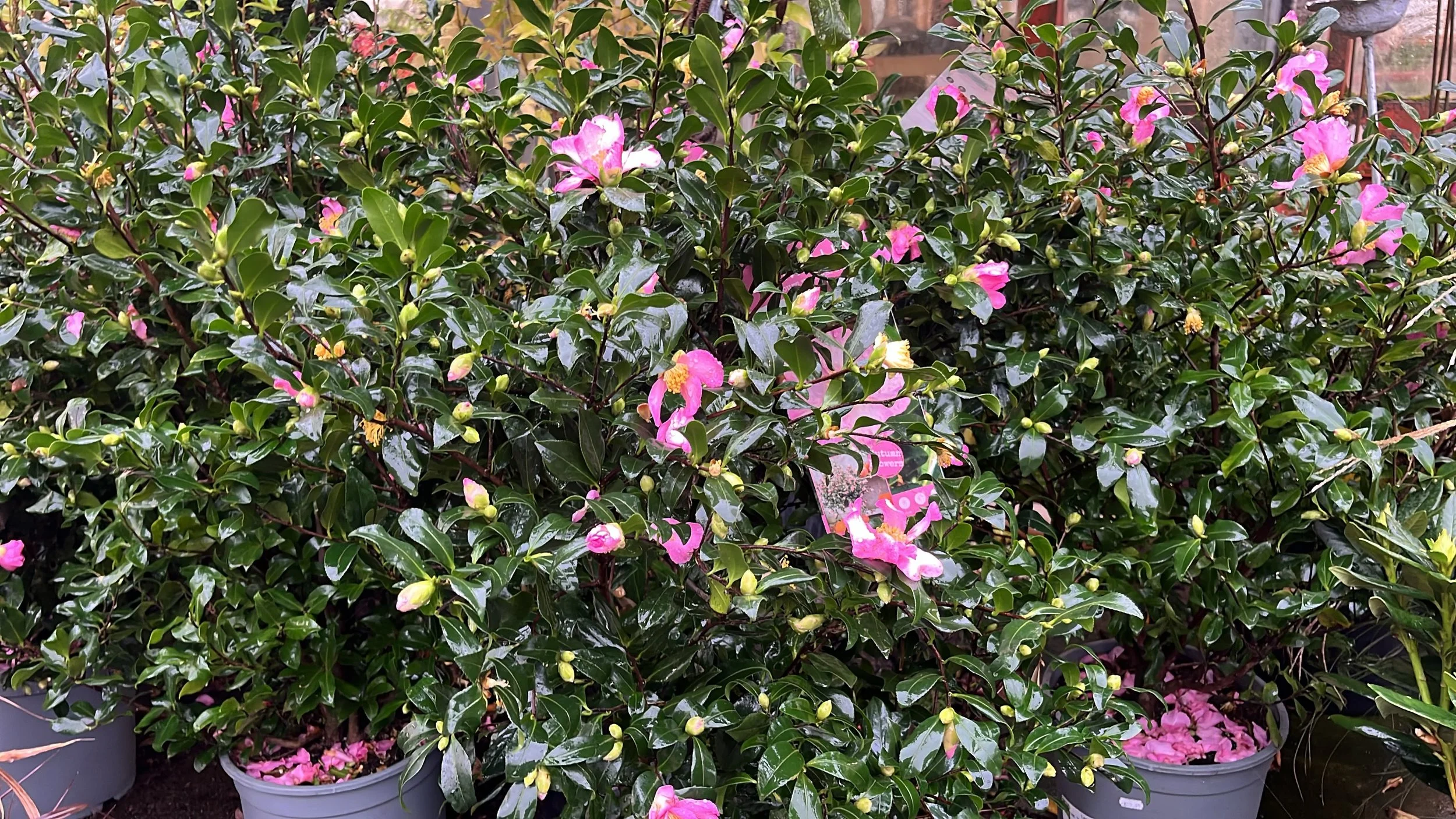
Camellias are evergreen shrubs grown for their glossy foliage and large, colourful flowers, which usually appear from late winter into spring.
They are a good choice for sheltered borders, woodland-style planting and containers, and can provide valuable colour at a time of year when many other plants are still dormant. With the right position and soil conditions, Camellias are relatively low maintenance and can live for many years.
Where Should You Plant Camellia?
Camellias generally perform best in partial shade or dappled shade.
A sheltered position is ideal, particularly somewhere protected from strong winds and very early morning sun. Frost can damage developing flower buds, and early sun after a frosty night can cause buds and flowers to brown.
A position facing west or north-west can work well, provided the plant still receives enough light.
Avoid very exposed sites and areas that become excessively hot and dry in summer.
What Soil Does Camellia Need?
Camellias prefer acidic, humus-rich, moist but well-drained soil.
If your garden soil is naturally acidic, Camellias can be planted directly into the ground. Where soil is neutral or alkaline, they are usually better grown in containers using ericaceous compost.
Good drainage is important. Camellias like consistent moisture, but they do not want to sit in waterlogged soil.
How to Plant Camellia
Container-grown Camellias can be planted for much of the year, although spring and autumn are particularly good times because the soil is usually moist and temperatures are milder.
Before planting:
Water the plant well while it is still in its pot.
Dig a hole wider than the root ball.
Position the plant so the top of the root ball is level with, or slightly above, the surrounding soil.
Backfill gently and firm the soil around the roots.
Water thoroughly after planting.
Add a mulch around the base to help retain moisture.
Avoid planting too deeply, as Camellias can struggle if the root ball is buried below the surrounding soil level.
Growing Camellia in Pots
Camellias are well suited to containers, especially where garden soil is not naturally acidic.
Choose a pot with good drainage holes and use ericaceous compost.
Keep the compost consistently moist, especially during warm weather and while flower buds are developing.
Rainwater is ideal for watering Camellias where possible, particularly in hard-water areas, because repeated use of alkaline tap water can gradually raise the compost pH.
Container-grown plants will also need feeding more regularly than those growing in the ground.
Does Camellia Need Sun or Shade?
Camellias generally prefer partial shade.
They can tolerate some sun, particularly in cooler conditions, but strong midday sun and very hot positions can cause leaves to scorch and the soil to dry too quickly.
A sheltered position with morning or evening light is usually ideal.
Very early morning sun can be a problem in winter because it can rapidly thaw frosted flower buds and flowers, leading to browning.
How Often Should You Water Camellia?
Newly planted Camellias should be watered regularly while they establish.
Once established, plants growing in the ground usually need watering during prolonged dry periods, particularly in summer.
This is especially important from late summer into autumn, when the plant is forming the flower buds for the following season.
Plants grown in containers will need more regular watering and should not be allowed to dry out completely.
Feeding Camellia
Camellias benefit from feeding during the growing season.
Use a fertiliser suitable for acid-loving plants, particularly for Camellias growing in containers.
Feed in spring after flowering and again during the early part of the growing season if needed.
Avoid heavy feeding late in the year, as this can encourage soft new growth that may be damaged by cold weather.
Pruning Camellia
Camellias generally need very little pruning.
Routine pruning can include removing:
dead or damaged branches,
crossing or congested growth,
shoots that spoil the overall shape.
If you need to reshape the plant more significantly, prune after flowering in spring.
Avoid pruning later in the year because Camellias form flower buds well in advance of the next flowering season.
Why Isn't My Camellia Flowering?
There are several possible reasons.
Common causes include:
the plant becoming too dry in late summer,
frost damage to flower buds,
pruning at the wrong time,
too much shade,
poor nutrition,
excessively alkaline soil.
Keeping the plant well watered while flower buds are forming is particularly important.
Why Are My Camellia Leaves Turning Yellow?
Yellow leaves can be a sign that the plant is struggling to access nutrients because the soil or compost is too alkaline.
This is often referred to as lime-induced chlorosis.
Camellias need acidic growing conditions, so if yellowing is widespread, check whether the plant is growing in suitable ericaceous compost or acidic soil.
Using an ericaceous feed may also help.
Other possible causes include overwatering, poor drainage or root stress.
Why Are My Camellia Buds Turning Brown?
Brown flower buds or flowers are commonly caused by:
frost damage,
early morning sun after frost,
drought stress,
very exposed conditions.
Moving container-grown plants to a more sheltered position can help, while established plants may benefit from protection from cold winds.
Is Camellia Hardy?
Most commonly sold Camellias are hardy enough for UK gardens, although young plants and developing flower buds can still be affected by severe frost and cold winds.
A sheltered position usually gives the best results.
Container-grown plants may need extra protection during prolonged periods of very cold weather.
Are Camellias Good for Wildlife?
Camellia flowers can provide an early source of nectar for insects when relatively few other plants are flowering.
Their evergreen foliage also adds year-round structure and shelter to the garden.
Are Camellias Toxic?
Camellias are generally considered low risk in gardens, but ornamental plants should not be treated as edible unless specifically identified for culinary use.
If you are concerned about pets or children, it is always sensible to check the exact variety before planting.