
Gav’s Guide
Cyclamen
Cyclamen at a Glance
Plant type: Tuberous perennial
Position: Partial shade or bright indirect light
Soil: Moist but well-drained
Typical height: Around 10–30cm depending on variety
Flowers: Autumn, winter or spring depending on type
Suitable for pots: Yes
Maintenance: Low to moderate
Cyclamen: Growing & Care Guide
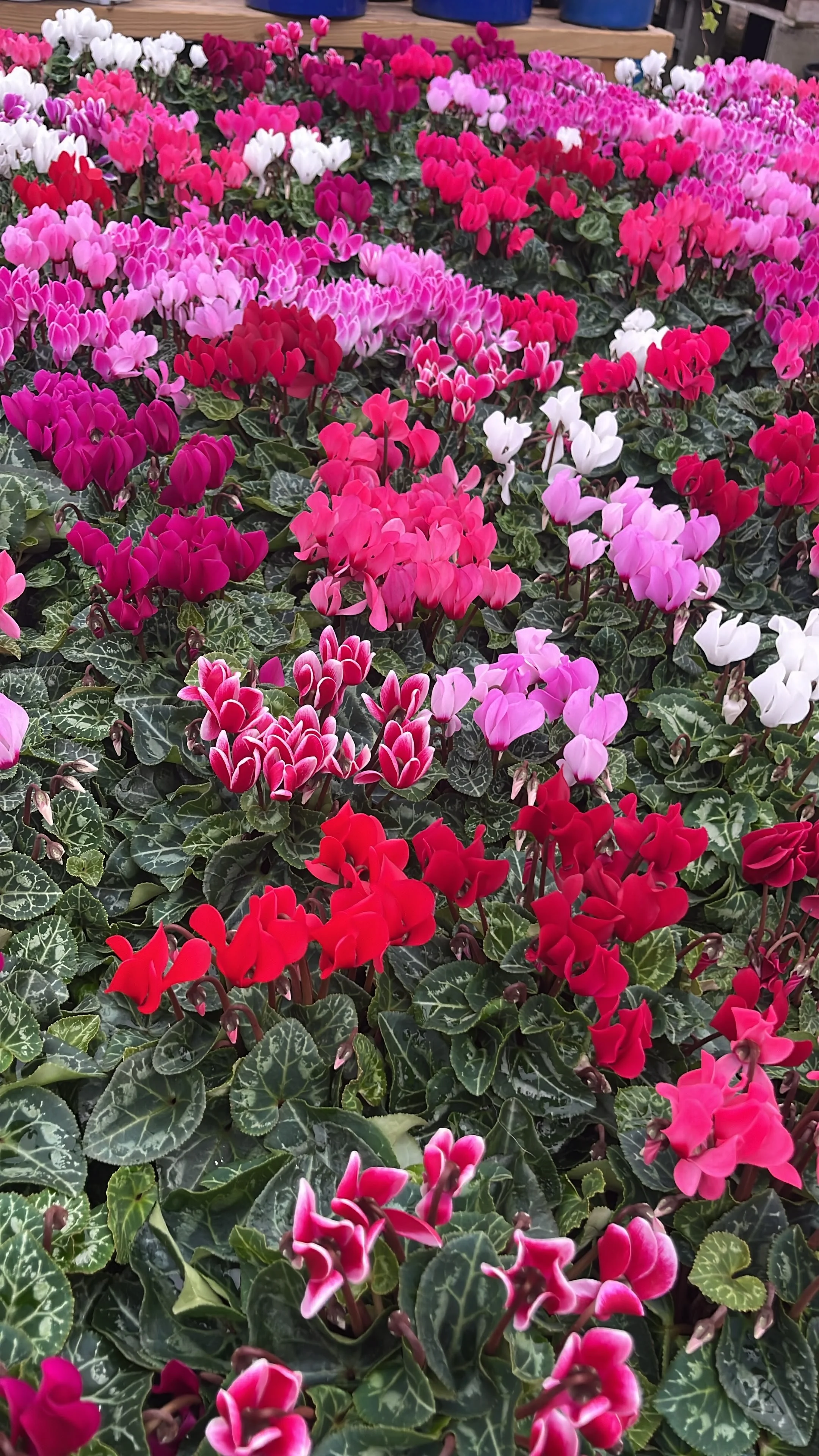
Cyclamen are compact flowering plants valued for their colourful, upswept flowers and attractive patterned foliage. Depending on the type, they can be grown indoors, in containers, or outdoors in sheltered parts of the garden.
Hardy Cyclamen are particularly useful for adding colour in autumn, winter and early spring, while florist Cyclamen are usually grown as houseplants or seasonal container plants.
Where Should You Plant Cyclamen?
Hardy Cyclamen usually perform best in partial shade or dappled shade.
They are well suited to planting beneath deciduous trees and shrubs, at the front of shaded borders, in woodland-style planting and in containers.
Avoid very hot, exposed positions where the soil dries out quickly.
Florist Cyclamen grown indoors prefer a cool, bright position away from strong direct sunlight and heat sources.
What Soil Does Cyclamen Need?
Cyclamen prefer fertile, well-drained soil that retains some moisture without becoming waterlogged.
For outdoor planting, adding organic matter can help improve both moisture retention and drainage.
For containers, use a good-quality multipurpose compost with good drainage.
Cyclamen tubers are particularly vulnerable to rot if they remain in permanently wet conditions.
How to Plant Cyclamen
Hardy Cyclamen can be planted in spring or autumn.
When planting:
Choose a shaded or partially shaded position.
Prepare the soil so it drains freely.
Plant the tuber at the correct depth for the variety.
Water gently after planting.
Avoid disturbing established tubers unnecessarily.
For container-grown plants, make sure the pot has drainage holes and do not allow water to collect around the roots.
Growing Cyclamen in Pots
Cyclamen are very well suited to containers.
Choose a pot with good drainage holes and use a free-draining compost.
Keep the compost lightly moist while the plant is actively growing and flowering, but avoid overwatering.
For indoor Cyclamen, a cool room will usually help the flowers last longer.
Does Cyclamen Need Sun or Shade?
Most Cyclamen prefer partial shade.
Hardy varieties grow particularly well beneath trees and shrubs where they receive filtered light.
Indoor Cyclamen prefer bright light but should be kept away from strong midday sun.
Too much heat or direct sunlight can cause flowers to fade quickly and foliage to wilt.
How Often Should You Water Cyclamen?
Cyclamen like evenly moist soil while actively growing, but they do not like sitting in water.
Water when the compost or soil begins to dry slightly.
For indoor Cyclamen, it is often better to water around the edge of the pot or from below rather than pouring water directly onto the crown or tuber.
Reduce watering as the foliage naturally dies back and the plant enters dormancy.
Feeding Cyclamen
Cyclamen generally do not need heavy feeding.
Container-grown or indoor plants can be fed with a balanced liquid fertiliser every few weeks while actively growing and flowering.
Avoid excessive feeding, particularly high-nitrogen fertilisers, as this can encourage leaf growth at the expense of flowers.
Pruning Cyclamen
Cyclamen do not need conventional pruning.
Simply remove:
faded flowers,
yellowing leaves,
damaged foliage.
For many Cyclamen, spent flower stems can be gently twisted and pulled away from the base rather than cut.
Why Is My Cyclamen Wilting?
Wilting can be caused by several things, including:
the plant becoming too warm,
dry compost,
overwatering,
poor drainage,
natural dormancy.
Indoor Cyclamen often struggle in centrally heated rooms because they prefer cool conditions.
Check the compost before watering, and move the plant away from radiators or other heat sources if necessary.
Why Are My Cyclamen Leaves Turning Yellow?
Yellowing leaves may be caused by:
overwatering,
poor drainage,
excessive heat,
natural dormancy after flowering.
If the plant has finished flowering and the leaves gradually begin to yellow, this may simply mean it is entering its normal resting period.
Why Has My Cyclamen Stopped Flowering?
Possible reasons include:
temperatures being too warm,
insufficient light,
inconsistent watering,
the plant entering dormancy,
lack of nutrients.
Keeping indoor Cyclamen in a cool, bright room often extends the flowering period.
Do Cyclamen Come Back Every Year?
Yes, many Cyclamen are perennial and can return year after year.
Hardy outdoor varieties can gradually spread and form attractive colonies when they are happy.
Indoor florist Cyclamen can also flower again, but they need a proper dormant period and careful watering to encourage another cycle of growth.
Are Cyclamen Good for Wildlife?
Hardy Cyclamen can provide useful early or late-season flowers when relatively few other plants are in bloom.
Their low-growing habit also adds cover and interest beneath trees and shrubs.
Are Cyclamen Toxic?
Yes. Cyclamen contain compounds that can be harmful if eaten, particularly in the tubers.
They should not be consumed, and care should be taken where pets or young children may have access to them.