Gav’s Guide
Skimmia Growing & Care Guide
Skimmia at a Glance
Plant type: Evergreen shrub
Position: Partial shade to full shade
Soil: Moist but well-drained
Typical height: Usually around 0.5–1.5m depending on variety
Flowers: Spring
Berries: Autumn and winter on suitable female or self-fertile varieties
Suitable for pots: Yes
Maintenance: Low
Skimmia: Growing & Care Guide
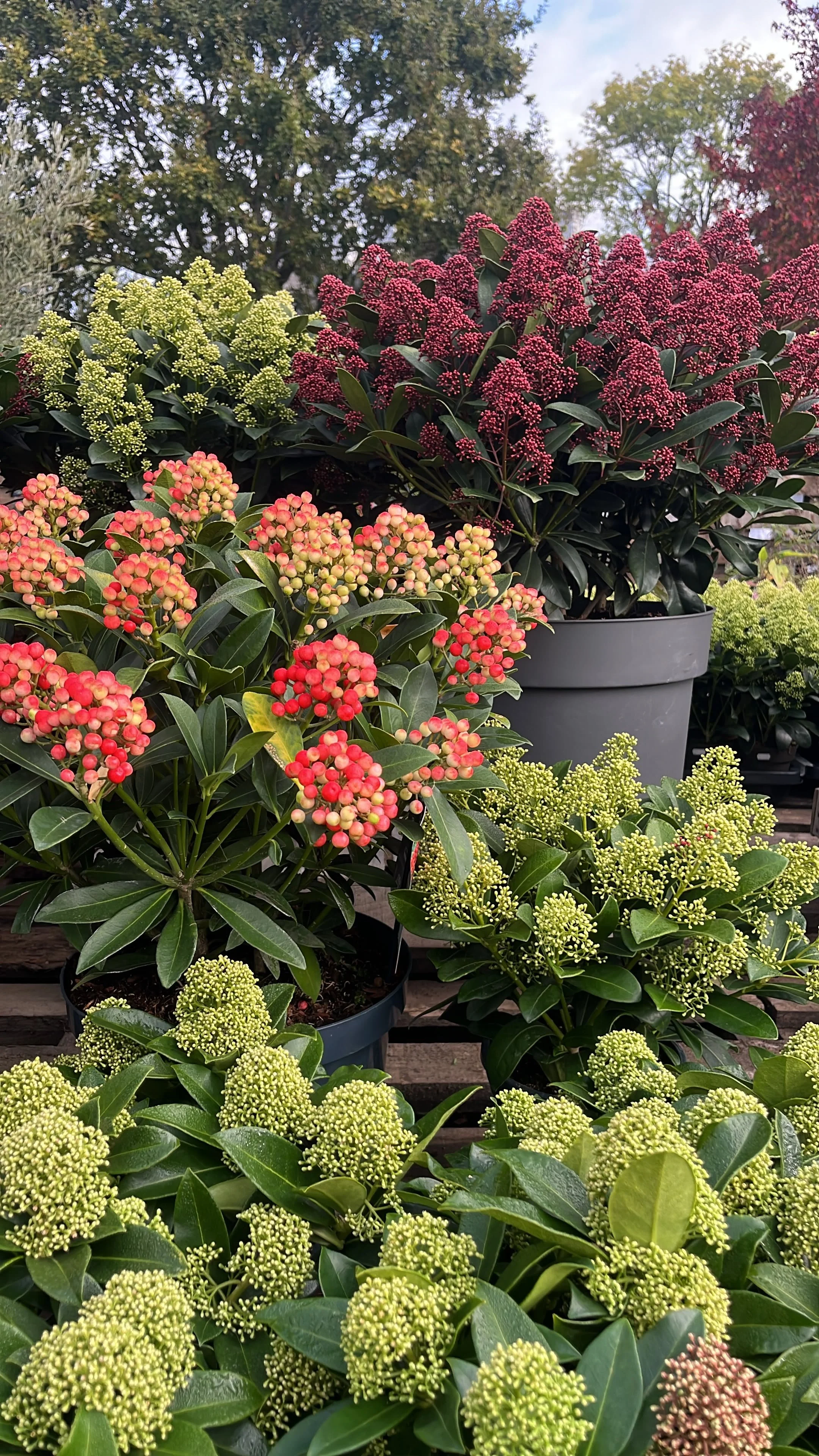
Skimmias are compact, evergreen shrubs that provide year-round structure, glossy foliage, fragrant spring flowers and, on female plants, attractive berries later in the year.
They are especially useful for shadier parts of the garden and work well in borders, containers and north-facing areas where some other shrubs can struggle. Skimmias are generally slow-growing and low maintenance, making them a good choice for smaller gardens as well as established planting schemes.
Where Should You Plant Skimmia? Sun or Shade?
Skimmias grow best in partial shade or deeper shade, making them ideal for north-facing borders, beneath taller shrubs and other sheltered areas that receive limited direct sunlight.
They can tolerate brighter positions where the soil remains consistently moist, but hot, dry and exposed locations should be avoided, as excessive sunlight can cause leaves to yellow and growth to weaken.
Choose a position with moist but well-drained soil, avoiding areas that become waterlogged or dry out excessively.
What Soil Does Skimmia Need?
Skimmias grow best in moderately fertile, humus-rich, moist but well-drained soil.
A common misconception is that Skimmia must be planted in ericaceous compost. It doesn't. Although many varieties grow well in neutral or slightly acidic conditions, Skimmia is not an acid-loving plant in the same way as rhododendrons or camellias and can also tolerate suitable alkaline soils.
For planting in the ground, improving the soil with organic matter can help retain moisture while maintaining good drainage.
How to Plant Skimmia
Container-grown Skimmias can be planted throughout much of the year, although spring and autumn are particularly good times because the soil is usually moist and the plant can establish before periods of extreme heat or cold.
Before planting:
Water the plant well while it is still in its pot.
Dig a hole roughly twice the width of the root ball.
Position the plant at approximately the same depth it was growing in the pot.
Backfill with the surrounding soil, gently firming it around the roots.
Water thoroughly after planting.
Add a layer of mulch around the plant, leaving a small gap around the stem.
Water regularly while the plant establishes, particularly during dry periods.
Growing Skimmia in Pots
Skimmias are also well suited to containers, particularly compact varieties.
Choose a pot with good drainage holes and use a suitable multipurpose or shrub compost. Keep the compost consistently moist without allowing the container to become waterlogged.
Plants in pots will usually need more frequent watering than those growing in the ground, especially during warm weather.
How Often Should You Water Skimmia?
Newly planted Skimmias should be watered regularly while their roots establish.
Once established, plants growing in the ground are relatively low maintenance, although they will benefit from watering during prolonged dry periods.
Container-grown plants need closer attention because compost dries out more quickly. Aim to keep the soil or compost moist but never permanently saturated.
Feeding Skimmia
Skimmias generally don't need heavy feeding.
An application of a general-purpose slow-release fertiliser in spring can support healthy growth, particularly on poorer soils or for plants growing in containers.
Mulching with organic matter in spring can also help retain moisture and gradually improve the soil.
Pruning Skimmia
Very little pruning is normally required.
Simply remove:
dead or damaged growth,
any shoots that spoil the plant's shape,
spent flower heads if necessary.
If more substantial reshaping is needed, prune carefully after flowering rather than cutting heavily into old wood. Skimmias are naturally slow-growing, so regular hard pruning shouldn't be necessary.
Avoid removing spent flowers from female varieties if you want berries to develop.
Why Isn't My Skimmia Producing Berries?
Most Skimmias have male and female flowers on separate plants. Female varieties produce berries only if they are pollinated by a compatible male plant growing nearby.
One male Skimmia can pollinate several female plants.
There are also a small number of forms that can produce berries without a separate male pollinator, including Skimmia japonica subsp. reevesiana.
So if berries are important to you, check the plant label before buying.
Useful tip:
Male Skimmias generally produce the showier flower buds but don't produce berries. Female plants can produce berries once successfully pollinated.
Why Are My Skimmia Leaves Turning Yellow?
Yellow leaves are often assumed to mean the plant needs ericaceous feed, but that isn't necessarily the case.
Skimmia foliage can yellow when the plant is:
growing in too much sun,
allowed to become too dry,
planted in poor or shallow soil,
struggling to access enough nutrients.
Improving watering, applying mulch and using a suitable general fertiliser can often help.
Is Skimmia Hardy?
Skimmias are generally hardy evergreen shrubs and are well suited to UK gardens.
Their combination of evergreen foliage, spring flowers and winter interest makes them particularly useful for keeping borders looking established throughout the year.
Are Skimmias Good for Wildlife?
Skimmia flowers can provide a useful source of nectar for visiting insects in spring, while the dense evergreen foliage adds year-round cover and structure to planting.
Some varieties are also included in the RHS Plants for Pollinators listings.
Is Skimmia Toxic?
Skimmia berries are ornamental and should not be eaten, as they may cause stomach upset if ingested.
Keep berries away from young children and pets, and avoid consuming any part of the plant.